How Much Time Do I Need At Antelope Canyon?
A time-budget answer for Antelope Canyon: how long the guided slot walk takes, how long the drive from Phoenix runs, and what a full-day departure really looks like hour by hour.
How Much Time Do I Need At Antelope Canyon?
Most people budget wildly wrong for Antelope Canyon. The canyon walk is short; the day is not. From Phoenix, the realistic commitment is 13 to 16 hours door to door, because the canyon sits roughly 275 miles north near Page, close to the Utah line, and you cannot simply wander in on your own schedule. Antelope Canyon is guided-only, every visit runs on fixed operator slots, and the slot itself is a single walk of about an hour and a half at most. This page breaks the time budget into its real pieces: the slot walk, the drive, the Horseshoe Bend stop most tours bolt on, and the full-day departure that stitches it all together.
How Much Time Do I Need At Antelope Canyon?
Plan on two numbers, not one. Inside the canyon you need 1 to 2 hours on a guided slot, plus the Navajo Parks permit process at check-in, which adds roughly 30 to 45 minutes at the meeting point before the walk. From Phoenix the whole excursion is a 13 to 16 hour day, since Page sits about 275 road miles and 4.5 to 5 hours of driving each way. Budget the full day, not the afternoon.
Those two numbers answer different questions, and travelers who only hear the first one get caught out. A visitor staying in Page, minutes from the canyon entrance, genuinely needs only a half-day: one guided walk, a permit fee, maybe a Horseshoe Bend overlook stop before lunch. A visitor based in Phoenix or Scottsdale is signing up for something entirely different, a pre-dawn pickup and a late-night return, because the drive alone is four to five hours in each direction before any time at the canyon counts.
The guided-tour system is what fixes the inner number so tightly. Antelope Canyon sits on Navajo Nation land, and entry is permitted only through an authorized Navajo-guided tour, with no self-guided option at any slot. Operators run groups on timed slots, and the walk moves at the guide's pace, pausing for photo spots and clearing the way for the group behind. You cannot linger an extra hour because the light is good; the slot is a one-way walk with an exit at the far end.
The permit adds its own slice of time. Beyond the tour price, every visitor aged 8 and up pays a $15 per person Navajo Parks permit fee per location per day, handled at or near the tour check-in. Lines at the check-in point, the drive from the tribal park office to the canyon mouth in the operator's vehicle, and the briefing all sit between your arrival time and the moment you actually step into the sandstone. That is why a short walk consumes closer to three hours of your calendar.
For readers planning the whole outing from the Phoenix metro, our Day Tours from Phoenix roster page collects every departure in one place, and the three canyon products below cover the typical full-day pattern.
How Long Are You Actually Inside The Slot Canyon?
Expect 1 to 2 hours inside the canyon itself on a standard guided walk, with most slots landing in the middle of that range. Upper and Lower Antelope Canyon slots are both short physical distances, a few hundred yards of sandstone corridor, but the pace is set by the guide and the photo stops, not by your legs. Add 30 to 45 minutes for check-in, permit fees and the shuttle to the canyon mouth before the walk begins.
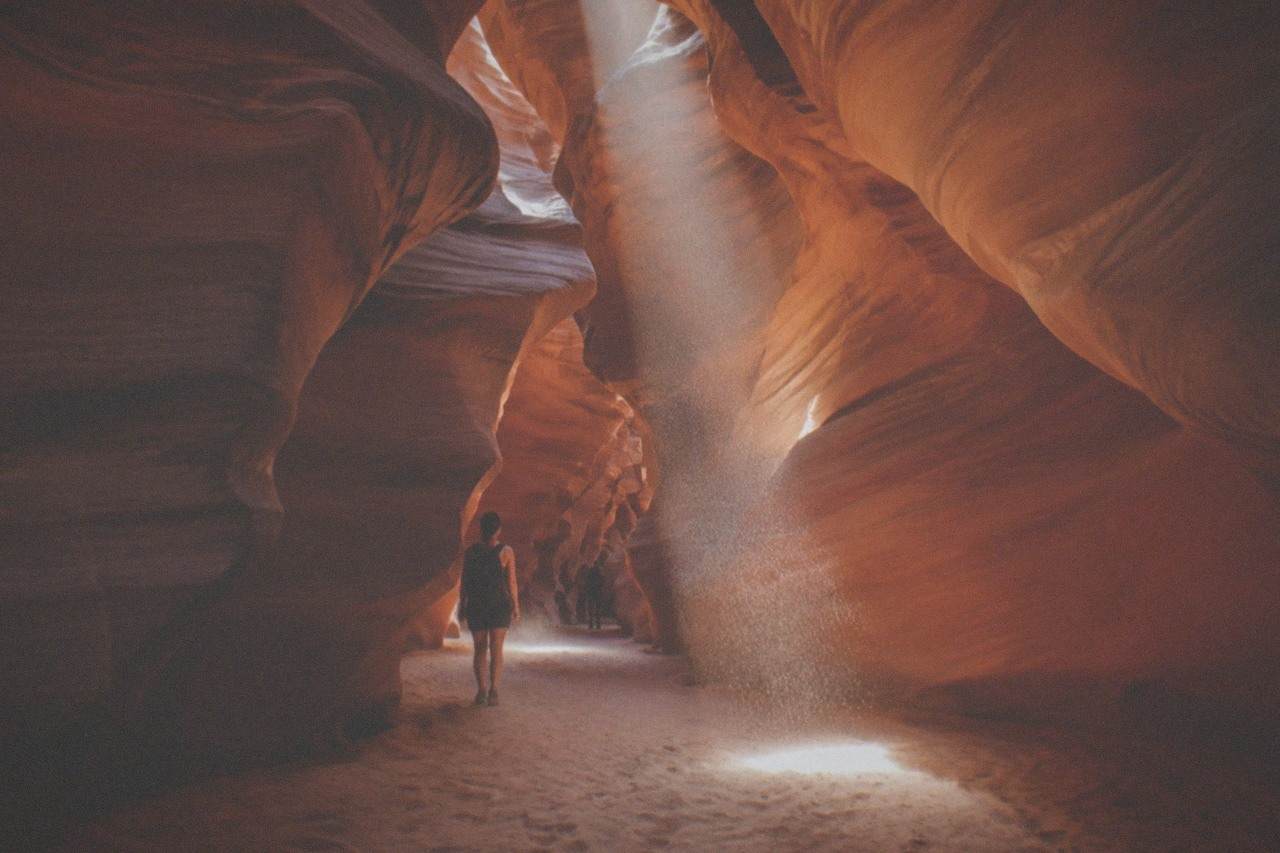
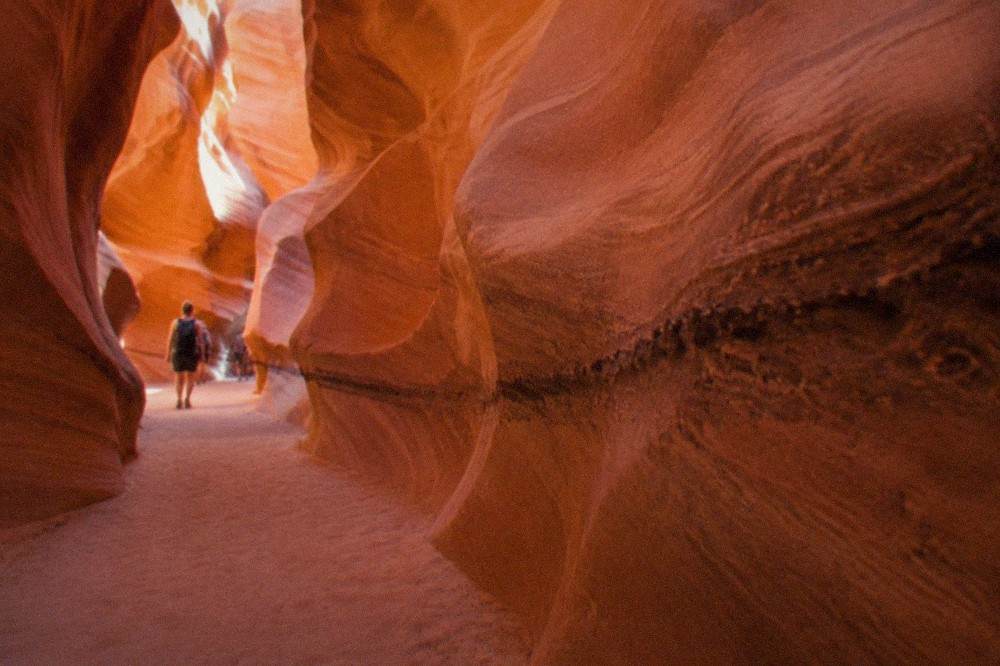
The fixed slot length surprises people who imagine an afternoon of wandering. Lower Antelope Canyon involves descending stairs into the slot and walking through a longer, narrower series of passages, with ladders at the far end on the way out. Upper Antelope Canyon is the flatter, shorter walk, reached partly by vehicle, famous for the midday light beams between late March and early September. Neither is a hike in any conventional sense. Both are walks with a guide ahead of you, and both end where the corridor ends.
What stretches the time is throughput. Slots run one direction, groups leave on a schedule, and the canyon narrows to single file in places. A guide will hold the group at a wide bend while the group behind passes through in the other direction's gap, or park everyone at a famous formation and run a quick photo rotation. Travelers who want the iconic shots without strangers in the frame should expect the guide to manage that for everyone in about the same window; that is part of the service, and part of the reason the time is fixed rather than flexible.
The permit and staging sequence deserves its own planning minute. On the day, you arrive at the operator's meeting point, pay the $15 per person Navajo Parks fee, board the operator's truck or van for the short hop to the canyon, get a brief orientation, then walk. In peak season the staging area itself backs up, and a tour listed at 1.5 hours can consume a full morning of your presence on site, even though your feet are on sandstone for barely half of it.
If the inner window feels short for the drive it demands, the honest comparison is with the whole-page picture in our Antelope Canyon tour guide, which walks through what each slot delivers for the time and money. For a time-first summary: the slot is the shortest part of the day by a wide margin.
How Long Is The Drive From Phoenix To Page?
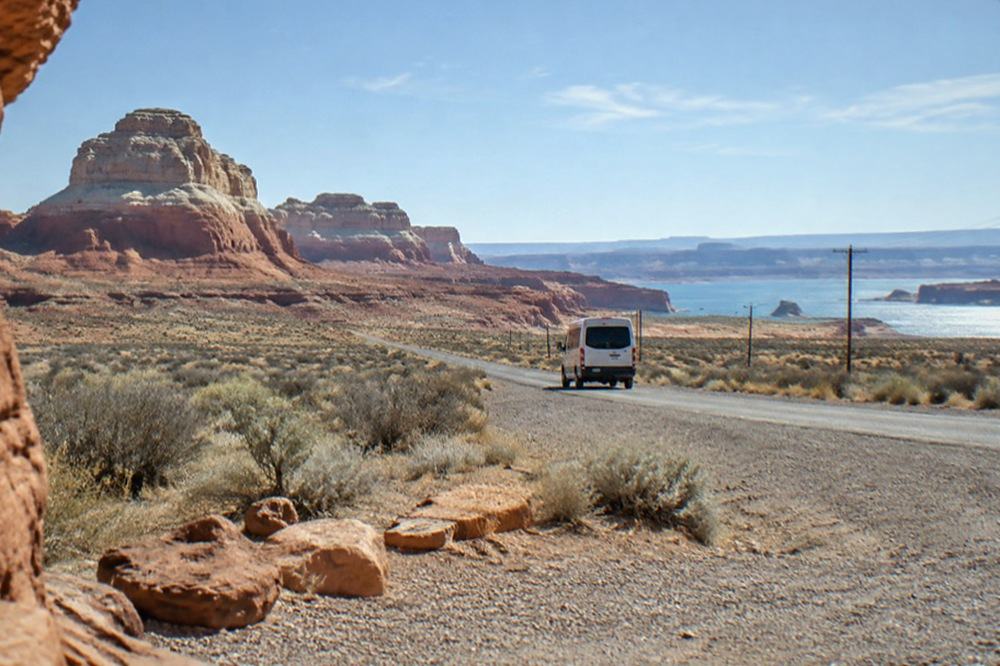
Roughly 273 to 280 miles each way, and 4 to 5 hours of driving depending on route and stops, measured from the Phoenix metro to Page, Arizona. There is no shortcut and no train; the route runs I-17 north, then US-89 through high desert. A day tour departure from Phoenix is built around that drive, usually 13 to 16 hours total.
The drive is the single biggest item in the time budget, and it is worth respecting rather than compressing. The road is good, but it is long, two-lane for stretches past Flagstaff, and it passes through country where a fuel or food stop is worth planning rather than hoping. Self-drivers doing this in one day leave very early, drive in the dark on the way home, or both. The NPS-adjacent figure travelers sometimes quote for nearby Grand Canyon routing does not apply here; Page is a different, farther destination, and the site's verified drive-time research puts it at about 275 miles and 4.5 to 5 or more hours each way.
A practical consequence: the day-tour products that make this trip from the Phoenix metro do not pad their schedules with a lot of free time, because there is no slack to pad with. The Antelope Canyon and Horseshoe Bend Day Adventure from Scottsdale or Phoenix runs 13 to 14 hours and is priced from $390 per person, with a 4.9 rating across 113 reviews and hotel pickup included. That block of hours is mostly road. The From Scottsdale: Antelope Canyon & Horseshoe Bend Day Tour is longer still at 15 to 16 hours, from $351 per person, rating 4.9 from 42 reviews, also with hotel pickup. The differences between those two are itinerary shape and pace more than canyon time, which stays roughly constant.
Monsoon season can stretch the drive further. From July through September, same-day flash-flood cancellations at the canyon are possible, and heavy cells over the drive corridor can add delays. That is not a reason to skip the trip, but it is a reason to keep some margin in any same-week planning, and a reason the guided products, which monitor conditions and reroute, hold an advantage over a rushed self-drive in storm season.
What Does A Full Day Tour From Phoenix Look Like Hour By Hour?
A typical canyon departure runs like this: pickup between 4 and 6 a.m., a rest stop around Flagstaff, arrival at Page by late morning, a guided slot walk plus permit check-in, a stop at Horseshoe Bend overlook, then a long return drive reaching Phoenix between 8 and 10 p.m. Total: 13 to 16 hours. The Horseshoe Bend stop adds about an hour, covering the 1.5 mile round-trip walk.
Here is how the roster's three main full-day products spread those hours. The Horseshoe Bend and Antelope Canyon Day Tour from Phoenix runs 14 hours, departs from Phoenix, is priced from $375 per person, and carries a 5.0 rating from 63 reviews, with no hotel pickup; guests meet on site. That last detail matters for the time budget: a meet-on-site product shifts the early-morning drive onto you, or at minimum onto a shorter pickup window.
| Departure | Total day | Canyon time | Extra stops | Pickup | Price from | Rating |
|---|---|---|---|---|---|---|
| Antelope Canyon and Horseshoe Bend Day Adventure | 13-14 hours | Guided slot walk, on itinerary | Horseshoe Bend | Hotel pickup | $390 per person | 4.9 from 113 reviews |
| From Scottsdale: Antelope Canyon & Horseshoe Bend Day Tour | 15-16 hours | Guided slot walk, on itinerary | Horseshoe Bend | Hotel pickup | $351 per person | 4.9 from 42 reviews |
| Horseshoe Bend and Antelope Canyon Day Tour from Phoenix | 14 hours | Guided slot walk, on itinerary | Horseshoe Bend | Meet on site | $375 per person | 5 from 63 reviews |
Notice what does not vary: the canyon time. Every product runs the same guided-slot mechanism, so the spread in total hours comes from pickup logistics, stop pacing and route choices, not from more time inside the sandstone. A longer day is not necessarily a better canyon experience; it is often a more comfortable one, with more generous rest stops.
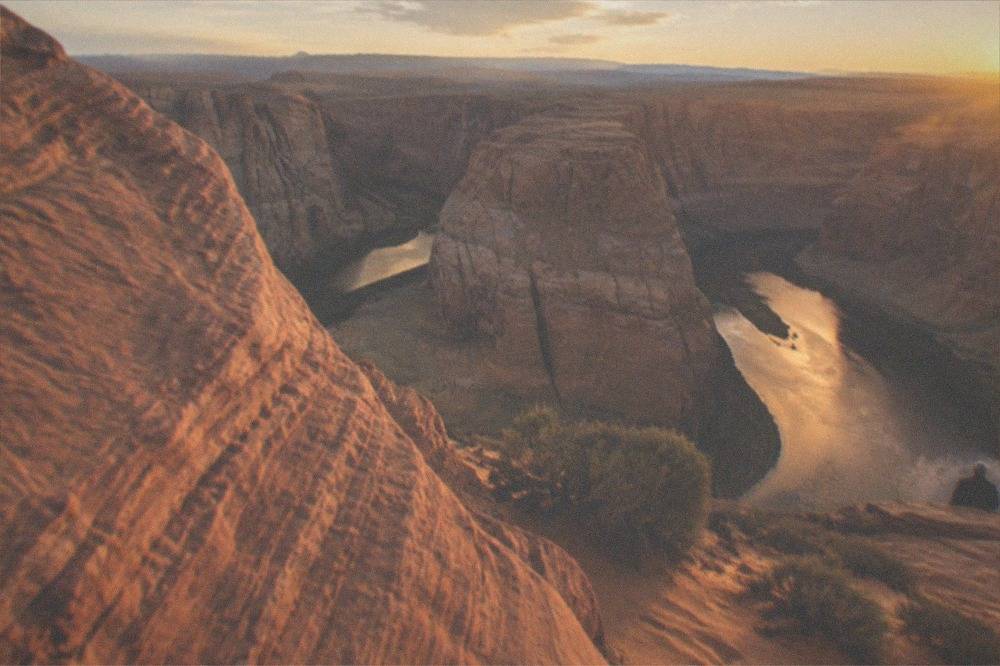
The Horseshoe Bend leg deserves a mention because almost every roster product pairs the two. The overlook sits just southwest of Page, parking is $10 per passenger vehicle in the City of Page lot, and no NPS pass is accepted because it is a city-run lot. The walk from lot to rim and back is about 1.5 miles round trip over gentle sand and rock, and most tours give it 60 to 75 minutes including photo time at the edge. Add that to your mental budget if you are self-driving: canyon, plus drive, plus this stop, plus food.
This is also why the booking-window question is really a time question. Upper Antelope Canyon's light-beam slots, the midday hours when sun shafts drop into the corridor, can book out 4 to 6 weeks ahead, and up to 3 to 6 months out in summer. Lower Antelope is more flexible, often 1 to 3 weeks. If you want a specific time of day rather than whatever slot is left, the lead time is part of your planning budget, and our advance-booking guide covers it in detail.
Upper Or Lower: Does One Take Longer Than The Other?
The in-canyon walking time is broadly similar, 1 to 2 hours guided in either slot, but the experience shape differs. Lower Antelope is a longer walk through narrower passages with stairs and ladders, and it takes a bit more of your on-site time. Upper Antelope involves a vehicle shuttle to the mouth and a flatter, shorter corridor, so its staging can run quicker.
The physical difference is real but modest in hours. Lower Antelope Canyon requires descending a metal staircase into the slot, walking the full corridor, and climbing stairs out at the end, which slows the group and makes the walk feel longer even though the clock difference is minutes, not hours. Upper Antelope Canyon guests ride in the operator's vehicle across sandy washes to the entrance, walk the corridor, and ride back; the shuttle is part of why Upper commands higher prices and why its midday light-beam slots are the ones that sell out furthest ahead.
Time of day interacts with time spent here more than most visitors expect. The light beams in Upper Antelope Canyon appear roughly from late March through early September, and only around the midday hours when the sun is high enough to drop directly into the slot. Book an early Upper slot and you get a beautiful canyon without the shafts of light the photographs promised. The guides know exactly where and when the beams land, which is another argument for the fixed-slot system: the schedule exists to put you inside during the best window, not to give you maximum minutes.
For a full breakdown of which slot fits which traveler, including mobility and time comparisons, see our Upper versus Lower comparison. The short version for this page's question: neither slot will materially change your total day from Phoenix, because the drive dominates. Choose on light, difficulty and photos, not on minutes.
Can You Do Antelope Canyon And Horseshoe Bend In One Day From Phoenix?
Yes, and that is exactly what the roster's full-day departures are built for. All three main Phoenix-area products visit both Antelope Canyon and the Horseshoe Bend overlook in a single 13 to 16 hour day, with the canyon walk in the middle and the overlook stop either side of it. The pairing works because the two sites sit a short drive apart near Page.
The geography makes the combo natural rather than rushed. Horseshoe Bend is minutes from the Antelope Canyon turnoff, both sit just outside Page, and a tour that has already driven 4.5 hours to reach one site adds the second for an extra hour of stopping. Doing them separately from Phoenix would mean paying the full drive twice, which no sensible time budget allows. The roster's most flexible version is the Horseshoe Bend and Antelope Canyon Day Tour from Phoenix, 14 hours, from $375 per person, 5.0 from 63 reviews, meeting on site rather than with hotel pickup.
The one-day pairing does have a real cost, and it is endurance rather than money. You will be on a coach or van for eight to ten of the day's hours, much of it in the dark at either end. Travelers who struggle with long road days, or with very early starts, should weigh the private alternative: the Private Lower Antelope Canyon Day Tour from Phoenix or Scottsdale runs 14 hours, from $430 per person, rates 5.0 from 34 reviews, and is flagged as often selling out. A private vehicle does not shorten the distance, but it shortens the friction: your own rest-stop pace, your own pickup window.
One more planning fact that belongs in this time budget: Lake Powell, the other headline attraction around Page, hit record-low water levels around 3,517 feet in September 2026 amid drought, as noted earlier. If you are tempted to stretch the day further with a lake stop, be aware the shoreline scenery is not what older photographs show, and the full-day tour schedule has little slack for it anyway. For the realistic overnight option, our blog post on whether a day trip is even possible runs the numbers both ways, including the case for staying a night in Page and buying yourself a shorter, saner canyon day.
Common Questions About Time At Antelope Canyon
How Much Time Do I Need At Antelope Canyon?
Inside the canyon, plan for a 1 to 2 hour guided walk plus 30 to 45 minutes of check-in, permit and shuttle staging. From Phoenix, budget the entire day, 13 to 16 hours door to door, because the drive to Page runs about 275 miles and 4.5 to 5 hours each way.
Can I spend longer inside the canyon than the tour allows?
No. Antelope Canyon is guided-only with no self-guided entry, and slots run on fixed schedules with one-way traffic through the corridor. If you want more time around the canyon, book two slots, for example Upper and Lower on separate tours, rather than expecting one walk to stretch.
How early do full-day tours from Phoenix leave?
Plan on a pickup roughly between 4 and 6 a.m. on the roster's Phoenix and Scottsdale departures. The day is front-loaded so the group reaches Page by late morning, walks the canyon in the best light window, then returns to the metro between 8 and 10 p.m.
Is the Horseshoe Bend stop included in the tour time?
Yes, on the roster's full-day products the Horseshoe Bend overlook is part of the 13 to 16 hour total. The stop itself runs about an hour, covering the 1.5 mile round-trip walk from the parking lot, where parking costs $10 per passenger vehicle with no NPS pass accepted.
Does Upper or Lower Antelope Canyon take more time?
Both run 1 to 2 hours guided. Lower Antelope involves stairs and ladders and a slightly longer corridor, so it consumes a bit more on-site time. Upper Antelope pairs a vehicle shuttle with a flatter, shorter walk. The difference is minutes, not hours, and the drive dominates either way.
How far ahead should I book to get the time slot I want?
Upper Antelope Canyon's midday light-beam slots can be gone 4 to 6 weeks ahead, and up to 3 to 6 months out in summer. Lower Antelope Canyon usually needs only 1 to 3 weeks of lead time. Book early if a specific hour of light matters to you.