Is Antelope Canyon Better In The Morning Or Afternoon?
A timing answer for Antelope Canyon: when the light beams appear, how the two canyon sections differ by hour, and which Phoenix and Scottsdale departure slots actually reach them.
Is Antelope Canyon Better In The Morning Or Afternoon?
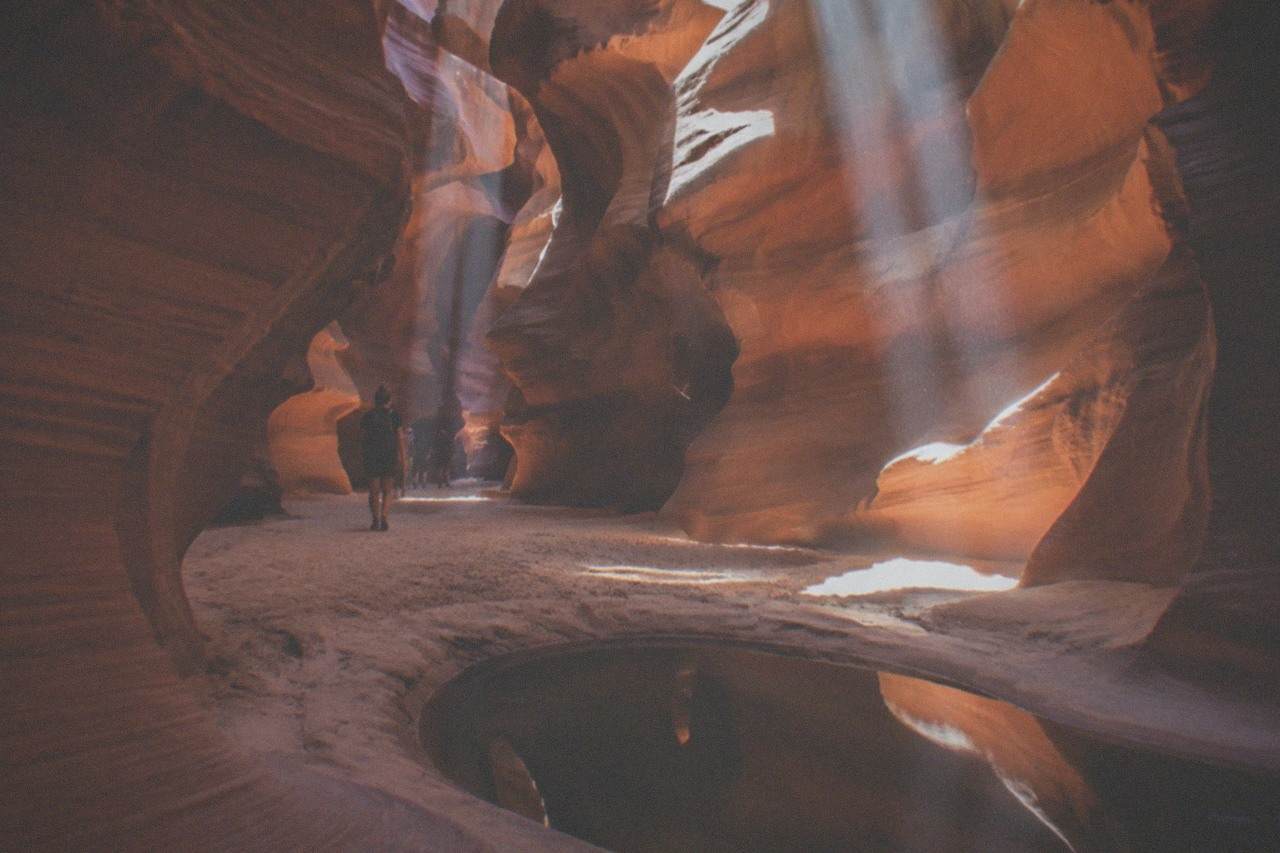
Neither hour wins on its own, because the two canyon sections answer the question differently. Upper Antelope Canyon is at its best near midday, roughly 10:30 a.m. to 2 p.m., when sunbeams drop through the ceiling slots and the sandstone turns translucent orange. Lower Antelope Canyon is better in the morning or late afternoon, when low-angled light rakes across its sculpted walls and the stair-climbed corridor is cooler and quieter.
That split is the single most useful thing to understand before booking anything, and it is why two travelers can come back from the same canyon on the same day with completely different verdicts. The light at Antelope Canyon is not a constant. It is a moving show that changes by the hour, and the canyon's two sections are oriented differently relative to the sun, so the same hour flatters one and flattens the other.
There is a practical layer on top of the optics. Antelope Canyon is guided-only, full stop. Upper, Lower and Antelope Canyon X are all accessible only through an authorized Navajo-guided tour, and each traveler pays a $15 per person Navajo Parks permit fee on top of the tour operator's own charge, per location per day for ages 8 and up. You cannot wander in at whatever hour suits you. You arrive in the slot the operator's schedule puts you there, which means the timing decision is really a booking decision, made weeks before you travel.
Advance booking matters more than most people expect. Upper Antelope Canyon's light-beam slots are often booked 4-6 weeks out, and in summer the prime midday windows can go 3-6 months ahead. Lower Antelope Canyon is more flexible, with 1-3 weeks of lead time usually enough. If you are reading this a few days before a Phoenix trip, Lower in the morning is realistically the option still on the table.
For travelers coming up from the Phoenix area, the day tours below handle the whole timing problem: the roughly 275-mile, 4.5-to-5-plus-hour drive, the permit, the guide and the slot reservation are all built into one fixed departure. This is the trio we would compare first.
When Do The Light Beams Appear In Upper Antelope Canyon?
The famous beams in Upper Antelope Canyon appear near midday, typically between about 10:30 a.m. and 2 p.m., and only when the sun is high enough to shine directly down through the narrow ceiling openings. They are strongest and most frequent from spring through early fall, when the sun climbs highest. Operators run dedicated midday beam tours, and those slots sell out weeks ahead because everyone wants the same two hours.
The beam is the whole reason Upper Antelope Canyon became the most photographed slot in the American Southwest. The canyon there runs roughly east-west under a ceiling cracked by narrow fissures, and when the sun passes overhead, columns of light pour through those fissures and land as visible shafts in the dust-laden air. Guides sometimes toss sand into the beam to make it glow. Outside that midday window the canyon is still beautiful, walls of flowing, cross-bedded sandstone in orange and violet, but the shafts are gone and the ceiling slots read as bright streaks rather than pillars of light.
Season shifts the show. From late March through September the sun's arc is high enough that beams appear on most clear middays. In winter the sun stays too low for direct beams, and midday tours become well-lit walks rather than light shows. If beams are the point of the trip, plan for spring or summer and pick a departure whose canyon slot lands inside that 10:30 to 2 window. Our guide to the best season for Antelope Canyon light beams breaks the month-by-month differences down in more detail.
One honest caveat: the beam is not guaranteed even in the right season. A passing cloud, haze or dust conditions can soften or erase it, and monsoon-season storms from July through September can force same-day cancellations of any Antelope Canyon tour when flash flooding threatens the slots. Operators watch the weather closely; the canyon's drainage funnels runoff fast, and no guide takes a group into a slot with storm cells upstream. Book the midday slot, but keep a flexible mindset.
What Time Of Day Suits Lower Antelope Canyon?
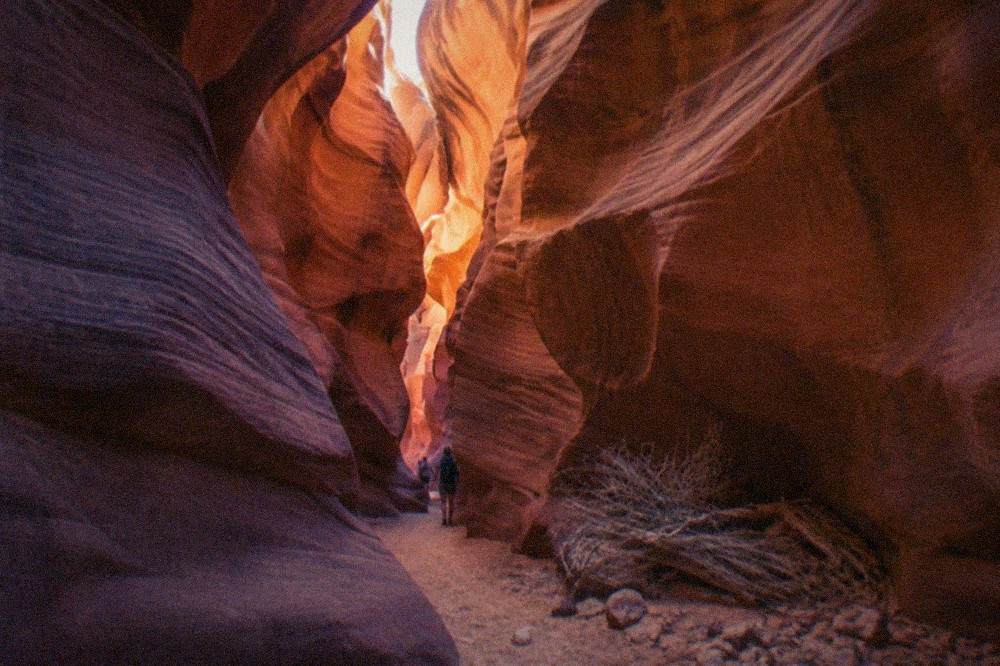
Lower Antelope Canyon is better in the morning or the late afternoon, when lower-angle light sweeps across its V-shaped corridor and deepens the color in the walls. Its geometry is the opposite of Upper's: the slot narrows toward the top, so direct midday beams rarely form, while angled light bouncing between walls produces the saturated purples and oranges photographers chase. It is also cooler and less crowded outside the midday rush.
Physically, Lower is a different experience. You descend metal staircases into the slot and climb back out at the far end, walking through a corridor that in places is narrow at the top and wider at the floor. Because the light enters indirectly, the color comes from reflection: morning and late-afternoon sun strikes the upper walls, bounces down and saturates the stone in layered waves. Midday, the light is flatter and the famous glow is harder to find, which is exactly why midday is the hour to be in Upper instead.
The crowd math also favors off-peak hours at Lower. Midday is when the beam-seekers flood Upper, and tour vans stack up at both entrances. A morning Lower tour tends to move through with more space, and in the hotter months the early slot is simply safer and more comfortable, since the stair sections and exposed ladders get punishing in full summer heat. The National Weather Service's Phoenix office issues heat alerts on a HeatRisk basis, factoring forecast high, overnight low and how unusual the heat is for the date, so there is no single fixed warning temperature; the practical rule is to check the live forecast before any outdoor midday activity from June through September.
Lower is also the more realistic late booking. Where Upper's beam slots can be gone months ahead in summer, Lower's 1-3 week lead time means travelers deciding a fortnight out can usually still get a good hour. Our comparison of the Upper versus Lower Antelope Canyon tours walks through the physical differences in full if you are still choosing between the two.
How Do Phoenix Departure Times Fit Each Slot?
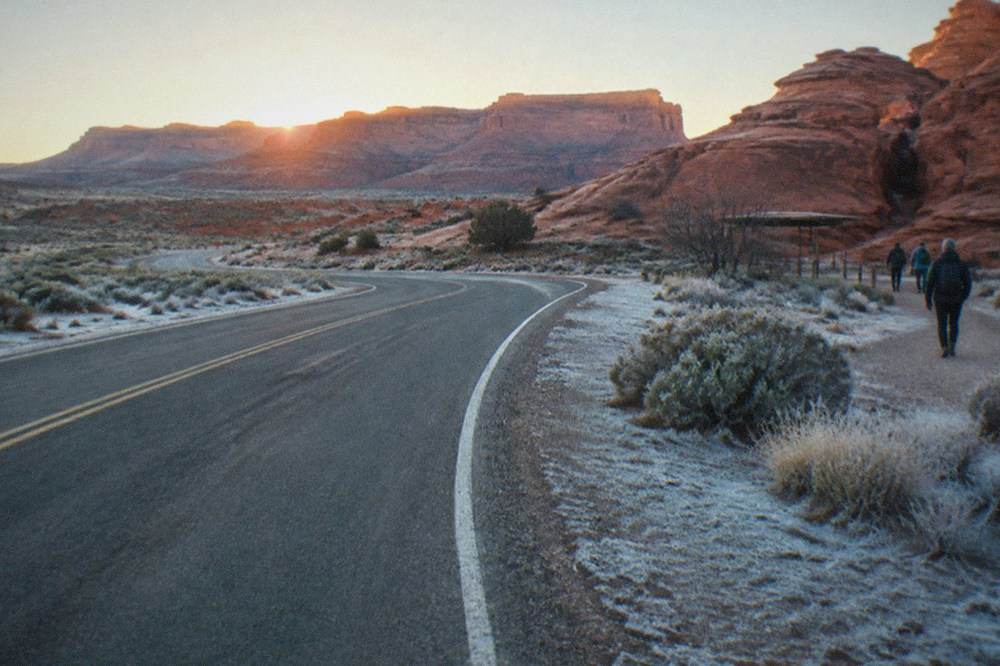
Every Antelope Canyon day tour on this roster is built around the drive: roughly 275 miles and 4.5 to 5-plus hours each way from Phoenix, which forces pre-dawn departures and pins your canyon arrival to a fixed operator slot. The 15-16 hour From Scottsdale tour, from $351 per person, departs early enough to place you in the canyon in the midday window, so the tour you pick quietly decides your hour of light.
This is the part of the timing question travelers often miss. You are not choosing an hour at the canyon; you are choosing a departure time in Phoenix, and the operator translates that into a canyon slot. A tour leaving the Valley before sunrise arrives in Page around late morning, which lines up with either the tail of the morning window at Lower or the front edge of the beam window at Upper. A later departure pushes your canyon time into the afternoon, which suits Lower's second glow period but misses Upper's beams entirely.
The roster's options map cleanly onto the two answers. The From Scottsdale: Antelope Canyon & Horseshoe Bend Day Tour runs 15-16 hours, is rated 4.9 from 42 reviews and starts from $351 per person, with hotel pickup offered; it is flagged as likely to sell out. The Antelope Canyon and Horseshoe Bend Day Adventure from Scottsdale or Phoenix runs 13-14 hours, is rated 4.9 from 113 reviews and starts from $390 per person. The Horseshoe Bend and Antelope Canyon Day Tour from Phoenix runs 14 hours, carries a 5.0 rating from 63 reviews, starts from $375 per person and meets on site rather than offering pickup. There is also a private option, the Private Lower Antelope Canyon Day Tour from Phoenix/Scottsdale, 14 hours, rated 5.0 from 34 reviews, from $430 per person, often selling out.
| Tour | Base | Length | Rating | From | Pickup |
|---|---|---|---|---|---|
| Antelope Canyon & Horseshoe Bend Day Tour | Scottsdale | 15-16 hours | 4.9 from 42 reviews | $351 per person | Hotel pickup offered |
| Antelope Canyon & Horseshoe Bend Day Adventure | Scottsdale or Phoenix | 13-14 hours | 4.9 from 113 reviews | $390 per person | Hotel pickup offered |
| Horseshoe Bend and Antelope Canyon Day Tour | Phoenix | 14 hours | 5.0 from 63 reviews | $375 per person | Meet on site |
| Private Lower Antelope Canyon Day Tour | Phoenix/Scottsdale | 14 hours | 5.0 from 34 reviews | $430 per person | Hotel pickup offered |
Whichever you book, confirm which canyon section the itinerary uses before you pay. A tour of Lower that lands at 11 a.m. is a fine trip, but it is not a beam tour, and a traveler expecting shafts of light will be disappointed through no fault of the canyon. The operator's live listing states the section, and if it does not, ask.
Does Season Change The Morning-Or-Afternoon Answer?
Yes, season bends the answer twice over. From spring through early fall the sun is high enough for Upper's midday beams, and summer also brings monsoon storms from July through September that can cancel any slot on short notice. In winter the beams largely disappear, the light is softer all day, and the morning-versus-afternoon choice becomes a question of comfort and crowds rather than optics.
The monsoon is the wildcard worth planning around. From July into September, storm cells over the canyon's drainage can trigger same-day flash-flood cancellations at any hour, and the slots close when guides judge the runoff risk too high. Morning tours have a modest edge here simply because there is less daylight left for weather to build; afternoon slots sit closer to the peak storm hours. That is a tendency, not a guarantee, and a morning booking in August can still be scrubbed by an overnight storm cell parked over the watershed.
Winter flips the calculus in a quieter way. With the sun tracking low, Upper's ceiling slots stop producing beams at any hour, so the midday premium evaporates and an afternoon visit loses nothing photographically. Crowds are thinner, the canyon is cool rather than furnace-hot, and the walls still photograph beautifully in the soft, angled light. A winter traveler should pick their hour for comfort and schedule, not for a beam that is not coming.
Spring and fall are the compromise seasons most locals would pick. The sun is climbing or still high enough for beams in Upper, temperatures are humane for the exposed stair sections at Lower, and the monsoon has either not started or has finished. If your dates are flexible at all, shoulder-season travel plus a midday Upper slot or a morning Lower slot is the combination that gets you the best version of both answers.
Morning Or Afternoon: Crowds, Heat And Horseshoe Bend
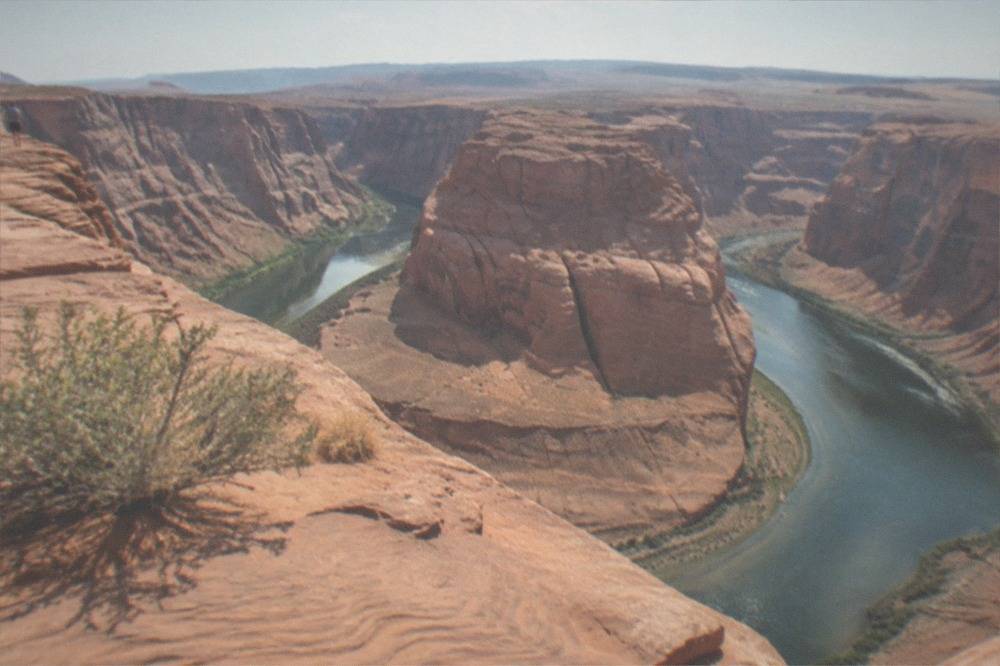
Outside the optics, morning wins on two practical counts: cooler air in the hot months and thinner crowds at the linked stops. Afternoon wins on one, a relaxed departure from Phoenix, since pre-dawn pickups for the long Page drive are brutal. Horseshoe Bend, which most of these tours also visit, is a 1.5-mile round-trip walk to an unfenced overlook where afternoon heat and crowds both peak.
The heat argument is not cosmetic. The walk from the Horseshoe Bend trailhead to the overlook is about three-quarters of a mile each way over sand and slickrock, with no shade, and summer afternoons in Page routinely sit at dangerous temperatures. Parking at the City of Page lot costs $10 per vehicle, and no national park pass is accepted because it is a city-run lot, not federal land. A tour that reaches the overlook in the late morning gets you the view with the walk still manageable; the same walk at 3 p.m. in July is a different proposition.
Crowds follow the same curve. The midday window at Upper is busy precisely because it is the best window, and tour groups move through the corridor in managed waves. Lower in the morning, or either canyon in the first hour of operation, feels noticeably calmer. Photographers who want frames without strangers in them consistently pick the earliest slot their tour can reach.
The counterweight is the departure. A 15-16 hour tour day that includes the full drive from Scottsdale means a pickup in the dark and a return well into the night. Some travelers happily trade that for a canyon slot at the right hour; others find a 13-14 hour day with a slightly later start a better fit, accepting that the canyon time lands later in the day. There is no wrong answer, only the trade you prefer, and our advice on how far in advance to book an Antelope Canyon tour helps lock whichever slot you choose before it disappears.
If the whole picture still feels like a lot of logistics, that is the honest case for letting a day tour carry it. Day Tours from Phoenix exists because this drive, permit, slot and timing puzzle is genuinely hard to self-manage from the Valley, and the fixed departures below turn it into a single booking decision.
Common Questions About Antelope Canyon Timing
Is Antelope Canyon Better In The Morning Or Afternoon?
It depends on the section. Upper Antelope Canyon is best near midday, about 10:30 a.m. to 2 p.m., when the light beams form. Lower Antelope Canyon is better in the morning or late afternoon, when angled light saturates its walls and the stair sections are cooler.
What Time Do The Light Beams Appear In Upper Antelope Canyon?
Typically between about 10:30 a.m. and 2 p.m., when the sun is high enough to shine directly through the ceiling slots. The beams are strongest from spring through early fall and largely disappear in winter.
Can You See Light Beams In Lower Antelope Canyon?
Rarely. Lower's V-shaped profile narrows toward the top, so direct midday beams seldom form. Its color comes from reflected, angled light, which is why morning and late afternoon are the better hours there.
Do Tours From Phoenix Arrive At The Canyon Around Midday?
The drive is roughly 275 miles and 4.5 to 5-plus hours each way, so the roster's tours depart before dawn and typically reach the Page area in the late morning, placing the canyon visit at or near the midday window.
Do I Need A Permit Or Reservation To Enter Antelope Canyon?
Antelope Canyon is guided-only with no exceptions, and every visitor pays a $15 per person Navajo Parks permit fee per location per day on top of the tour price. Upper's midday beam slots often sell out 4-6 weeks ahead, longer in summer.
Can Weather Cancel My Tour Time?
Yes. During monsoon season, July through September, flash-flood risk can force same-day cancellations at any hour, and operators close the slots when storms sit over the drainage. Morning slots have slightly less exposure to afternoon storm buildup.