Is There A Train That Goes From Phoenix To Sedona?
No train connects Phoenix and Sedona. Here is why the rail line never happened, and the realistic ways to reach Sedona without driving yourself.
Is There A Train That Goes From Phoenix To Sedona?
No, there is no train of any kind between Phoenix and Sedona. Amtrak does not serve Sedona, no commuter rail line runs north from Phoenix past the metro edge, and the historic branch route through the Verde Valley has not carried passengers in decades. The realistic options are driving yourself, riding a guided tour van, or booking a private driver, and the drive is roughly 115 miles taking about two hours each way.
That answer surprises a lot of first-time visitors, because Arizona looks like rail country on the map. The state does have a famous train, the Grand Canyon Railway, but it runs south to north from Williams to the Grand Canyon's South Rim, nowhere near the Phoenix-to-Sedona corridor. Sedona's nearest rail connection of any kind is the Verde Canyon Railroad out of Clarkdale, about 25 miles away, and it is a scenic excursion loop, not transportation: it departs Clarkdale and returns to Clarkdale, so it cannot get you from Phoenix to Sedona or back.
The practical consequence is simple. Every visitor asking about a train is really asking how to see Sedona's red rock country without renting a car or spending a day staring at Interstate 17. The van tours below answer that question directly, and the rest of this page covers why the rail option never existed, what the drive is like, and how people get around Sedona once they arrive. For a broader look at the trade-offs, our piece on whether Day Tours from Phoenix beat a rental car covers the same decision for every destination in this guide.
Why No Rail Line Connects Phoenix And Sedona
Sedona has never had a passenger station on a through route. The town grew up around a dirt road and later a highway, and the rail branch that did reach the Verde Valley served the copper mines at Jerome and Clemenceau, not tourists. Passenger service on that branch ended generations ago, and no proposal to restore it has ever secured funding, so nothing in the current Amtrak or regional plan includes Sedona at all.
The history explains the gap. Phoenix itself lost its Amtrak service when the Sunset Limited route was rerouted through Maricopa, roughly 35 miles south of the city, and even that station is an overnight stop on a Los Angeles-to-New Orleans train. Amtrak's map of Arizona today shows stops at Maricopa, Tucson, Flagstaff and Kingman, and Flagstaff is the closest any of them comes to Sedona at about 30 miles away. But the Flagstaff station is served by the same long-distance trains on their coast-to-coast schedules, so it is a way to cross the country, not a way to make a two-hour hop between two Arizona towns.
Geography sealed the decision long before anyone thought of red rock tourism. The corridor from Phoenix to Sedona climbs from the Sonoran Desert floor up through the transition zone into Oak Creek Canyon country, a rise of several thousand feet across terrain that is expensive to build rail through. The highway, first AZ-79 and later the I-17 and AZ-179 combination, followed the route the railroads never wanted. Sedona's growth as a destination happened entirely in the era of the automobile, and the town's layout reflects it: a spread-out resort community with no central station district, because no station was ever coming.
It is worth being clear about what a hypothetical train would even do here. The Phoenix metro has grown northward toward the corridor, and commuter rail proposals for the region have circulated for years, but every one of them targets the urban core and its immediate suburbs, not a mountain town two hours up the grade. Sedona's year-round population is small relative to the cost of a rail build through that terrain, and the tourism traffic that would justify the line is seasonal, peak-heavy and already served by tour operators and shuttle services. No serious funding proposal has ever cleared those hurdles.
How To Get To Sedona Without Driving Yourself
A guided day tour van is the main realistic alternative to driving. Roster departures from Phoenix run roughly 8 to 10 hours, include hotel pickup, and pair Sedona with stops such as Jerome and Montezuma Castle, with prices from $165 per person. A private driver or charter is the other option, typically costing several hundred dollars more for the day, and rideshares are impractical for a 115-mile one-way trip.
The van tour deserves the comparison shoppers' attention because it solves two problems at once: the transport question this page is really asking, and the what-to-actually-do question that follows. The Sedona with Jerome and Montezuma Castle One-Day Van Tour runs a 10-hour loop from Phoenix with hotel pickup, rated 4.7 from 69 reviews, from $165 per person. It carries a 4.7 rating from 69 reviews and hits Montezuma Castle, Jerome and Sedona in one day, which is a schedule a first-time self-driver would struggle to build. See the Sedona Jerome van tour details for the full itinerary.
Two sibling departures cover the same ground with different formats, and the differences are worth a side-by-side look before you commit. The table below lines up the three roster options that solve the no-train problem, using the verified figures from each listing.
| Tour | Departs | Duration | Rating | Price From |
|---|---|---|---|---|
| Sedona with Jerome and Montezuma Castle One-Day Van Tour | Phoenix | 10 hours | 4.7 from 69 reviews | $165 per person |
| Sedona, Jerome & Montezuma Castle Day Trip | Phoenix | Full day | 4.9 from 39 reviews | $165 per person |
| Montezuma Castle, Jerome and Sedona Day Tour | Scottsdale or Phoenix | 8 hours | 5.0 from 8 reviews | $225 per person |
Between the three, the choice mostly comes down to departure point and how much Sedona free time you want. The Sedona, Jerome & Montezuma Castle Day Trip is also a full-day Phoenix departure from $165 per person, rated 4.9 from 39 reviews, and it is flagged as often selling out, so booking ahead matters. The Montezuma Castle, Jerome and Sedona Day Tour From Scottsdale or Phoenix runs a tighter 8-hour schedule from $225 per person, rated 5.0 but from only 8 reviews, so treat that score as a small sample rather than a verdict.
One planning note on the sites themselves: Montezuma Castle National Monument charges $10 per adult for entry, children 15 and under free, and that pass also covers Tuzigoot for seven days, per the National Park Service fee page. Some tours bundle the stop, some leave the entry to you, so check what the listing includes before comparing prices. Beyond the tours, the remaining no-car options are thin: a private charter burns most of a car-rental budget in a single day, and a rideshare north is a coin flip on the return leg, since drivers coming back empty to Phoenix are rare midweek.
What The Drive From Phoenix To Sedona Is Like
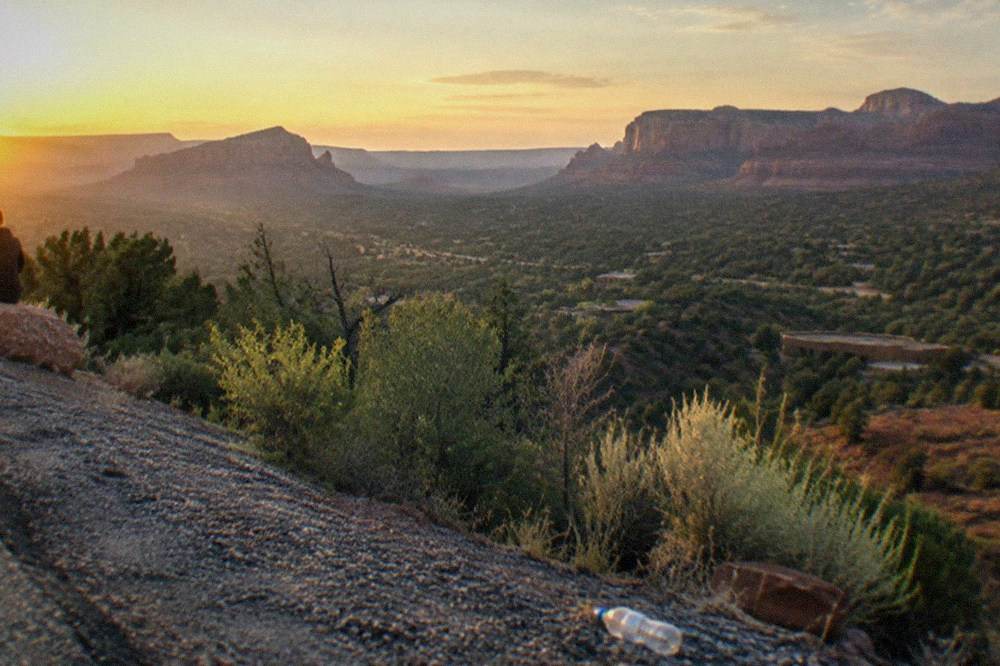
The drive is about 115 miles and takes roughly two hours each way, almost entirely on I-17 north with a final stretch on AZ-179 through Oak Creek Village. It is a genuinely scenic route once you leave the desert floor, with the red rocks appearing in the last half hour, and it is an easy road for any car. The only real caution is winter weather on the climb and summer afternoon congestion arriving into town.
For a decision about driving yourself, the numbers matter more than the scenery. Two hours each way means four hours of wheel time for a day trip, on top of parking and navigation inside Sedona, where trailhead lots fill early and the town's roundabouts slow midday traffic to a crawl. That is the arithmetic that pushes many visitors toward a tour van: the same two hours each way, but spent looking out the window instead of at the road. Our deeper comparison in the Sedona day trip planning guide works through the full drive-versus-tour math, and it is worth reading before you commit either way.
There is one 2026 wrinkle anyone routing through the area should know. The Pocket Fire, which started around June 19, 2026 and grew past 27,000 acres near Oak Creek Canyon, forced evacuations and temporary SR-89A closures during the summer. The highway itself has since reopened, but some post-fire effects lingered into October 2026: the West Fork trail and the Slide Rock swim area stayed closed into fall because of ash and sediment washing into Oak Creek. If your Sedona day includes the canyon's swimming holes, verify their status before you go.
Getting Around Sedona Once You Arrive
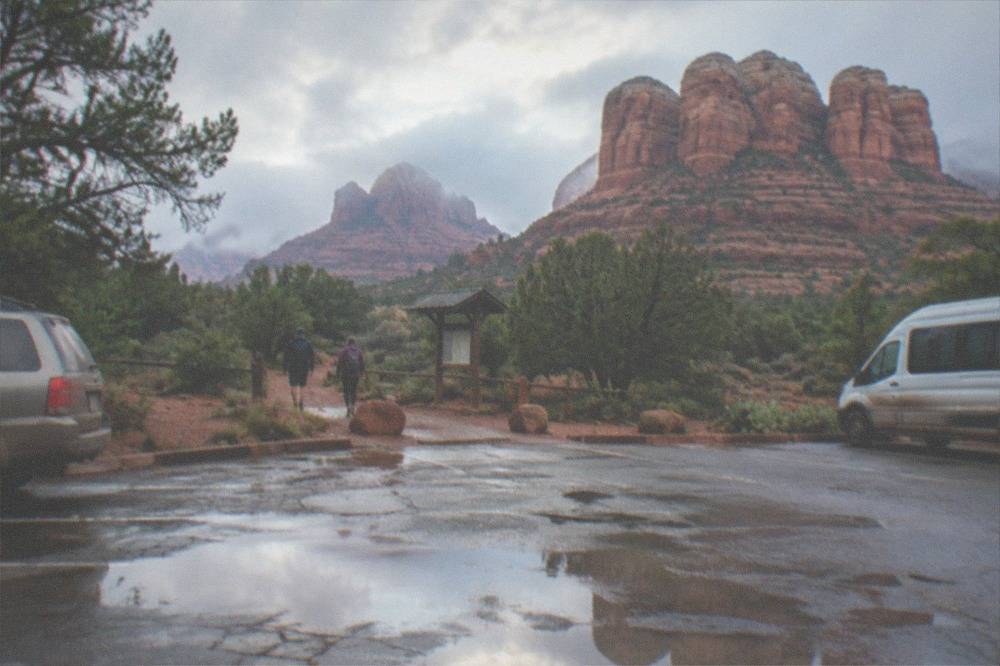
Sedona is drivable but parking-constrained, and the town runs a free Sedona Shuttle on the busy Cathedral Rock and Soldier Pass routes Thursday through Sunday, when private vehicles are blocked from those trailhead lots. A Red Rock Pass, $5 daily, is required to park at most developed Forest Service trailheads. On shuttle days, riders park at the park-and-ride lots and ride in, which is the cheapest trailhead access in the Southwest.
The parking fee detail catches self-drivers off guard. The Red Rock Pass requirement applies to most developed Forest Service trailheads around Sedona, and the Coconino National Forest passes page lists the daily, weekly and annual options. Tour vans, by contrast, drop passengers at designated stops, so the pass question mostly disappears on a guided day. If you drive yourself and plan to hike, budget the pass and arrive before mid-morning, because the marquee lots turn over slowly.
The shuttle schedule changes the shape of a hiking day more than most visitors expect. On Thursday through Sunday, the two most popular trailheads, Cathedral Rock and Soldier Pass, are closed to private cars entirely, so the shuttle is not a convenience on those days, it is the only way in. Riders park at the park-and-ride lots in town and ride in, which costs nothing but adds a short wait each direction. On weekdays the lots reopen to cars, and the Red Rock Pass or an interagency pass applies at the pay stations. Either way, the lesson is the same one running through this whole page: Sedona's access rules were built around vehicles, and knowing which kind of vehicle, and whose driving, is the real planning question.
When A Guided Day Tour Beats The Drive
A guided tour wins when your Sedona time is one day, when you would rather not add four hours of driving to it, or when you want the Jerome and Montezuma Castle stops without planning three destinations yourself. Driving yourself wins when you want sunrise at a specific trailhead, an overnight stay, or full control of the schedule. For a single-day visitor from Phoenix without a car, the tour van is close to the only practical answer.
The strongest version of the tour case is the three-stop day. Jerome, a living ghost town with working wine tasting rooms, and Montezuma Castle, the cliff dwelling an hour short of Sedona, both sit roughly on the way, and a van tour strings them into one loop. The Sedona, Jerome & Montezuma Castle Day Trip covers exactly that route from $165 per person, rated 4.9 from 39 reviews, with hotel pickup included and an often-sells-out flag worth respecting. Building the same day solo means three sets of parking, two entry stops and no one else handling the wheel on the drive home after dark.
The honest counterpoint: a tour day in Sedona is a sampler, not a deep dive. You get the overlooks, Uptown, and a fixed window of free time, and you trade the freedom to linger at Devil's Bridge for the freedom to nap on I-17. Visitors who fall for Sedona, and many do, tend to book the tour first and return later with a car and an overnight. If that is you, our piece on whether Sedona justifies a day trip from Phoenix addresses the longer question directly, and the answer there shapes whether one guided day is enough or just the beginning.
Common Questions About Trains From Phoenix To Sedona
Is There A Train That Goes From Phoenix To Sedona?
No. No passenger train of any kind connects Phoenix and Sedona. Amtrak does not serve Sedona, Phoenix itself has no station, and the nearest Amtrak stop to Sedona is Flagstaff, roughly 30 miles away, served only by long-distance coast-to-coast trains. The realistic options are driving, a guided tour van, or a private driver.
Is There Any Train Near Sedona At All?
Yes, two, but neither gets you there. The Verde Canyon Railroad departs and returns to Clarkdale, about 25 miles from Sedona, as a scenic excursion rather than transportation. The Grand Canyon Railway runs from Williams to the Grand Canyon South Rim, on the opposite side of the state.
How Far Is Sedona From Phoenix By Car?
About 115 miles, taking roughly two hours each way, mostly on I-17 north with the final stretch on AZ-179. It is an easy drive for any vehicle, with the main cautions being winter conditions on the climb and midday congestion arriving into Sedona.
Can You Visit Sedona From Phoenix Without A Car?
Yes, and a guided day tour van is the practical way. Departures from Phoenix run 8 to 10 hours with hotel pickup, from $165 per person, and pair Sedona with Jerome and Montezuma Castle. A private charter is the alternative, at a significantly higher cost.
Does The Sedona Shuttle Replace A Car In Town?
Partly. The free Sedona Shuttle serves the Cathedral Rock and Soldier Pass trailheads Thursday through Sunday, when private vehicles are blocked from those lots. It is excellent for hiking days but does not cover arrival from Phoenix, which is why the train question usually becomes a tour-van question.