What Is The Best Month To Go To Sedona?
A month-by-month answer to the best time to visit Sedona, covering weather, crowds, monsoon risk, the 2026 Pocket Fire closures, and which departure fits each season.
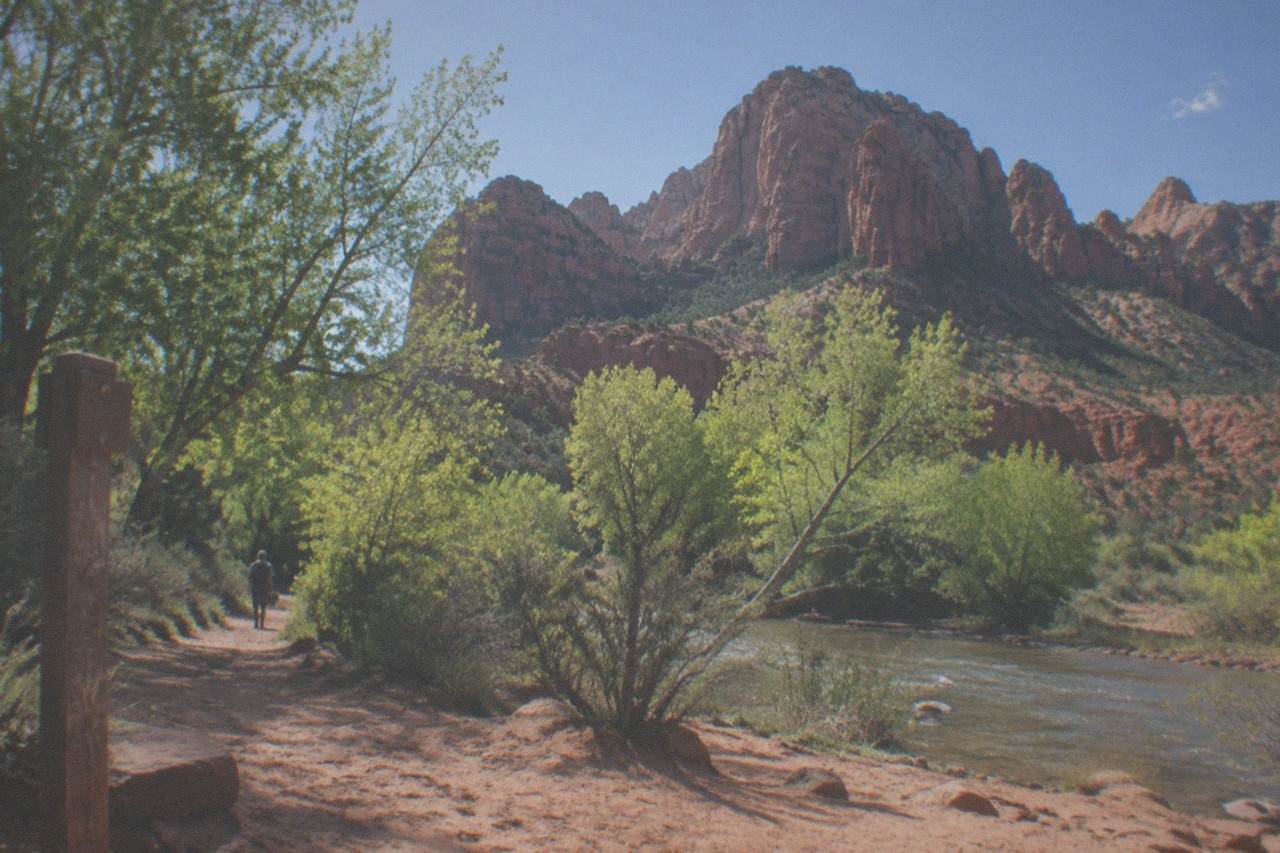
October through April is the sweet spot for most Sedona visitors, and October itself is the single best month: summer heat has broken, monsoon storms have ended, and the crowds of spring break have not yet arrived. March, April, October and November all deliver mild daytime temperatures and trail-friendly conditions. Avoid July and August unless you want monsoon storms and the hottest afternoons of the year.
That answer holds for the town, the trails and the viewpoints, but the details shift a little depending on what you are there to do. A hiker, a photographer chasing red rock against golden cottonwoods, and a family mostly riding between scenic stops will each weight the calendar differently, and the sections below break those apart month by month.
Sedona is also a day-trip destination, not just a vacation base. It sits about 115 miles north of Phoenix, roughly a two-hour drive up I-17, which puts it within range of a single long day. If you are pairing a Sedona visit with a guided departure rather than a self-drive, the season matters twice over: once for the weather, and once for the fact that the popular Sedona day tours often sell out during peak months. The Day Tours from Phoenix roster includes several Sedona departures, and the trio below is a fair cross-section of what a day trip from the valley looks like in practice.
Which Months Have The Best Sedona Weather?
March, April, May, October and November are the months when Sedona's weather does what guidebooks promise: daytime highs mostly in the 60s to low 80s Fahrenheit, cool mornings, and long stretches of clear sky. June is dry but hot, September is warm with fading monsoon risk, and December through February bring crisp air, occasional snow on the high red rocks, and the year's shortest days.
The pattern behind those numbers is elevation. Sedona sits at roughly 4,350 feet, high enough to knock several degrees off the Phoenix forecast in every season. A valley afternoon that reads 105 degrees is typically a Sedona afternoon in the low 90s. That gap narrows in winter, when Sedona can actually be the colder of the two, which is why winter visitors see frost on the trailhead parking lots some mornings even as Phoenix stays mild.
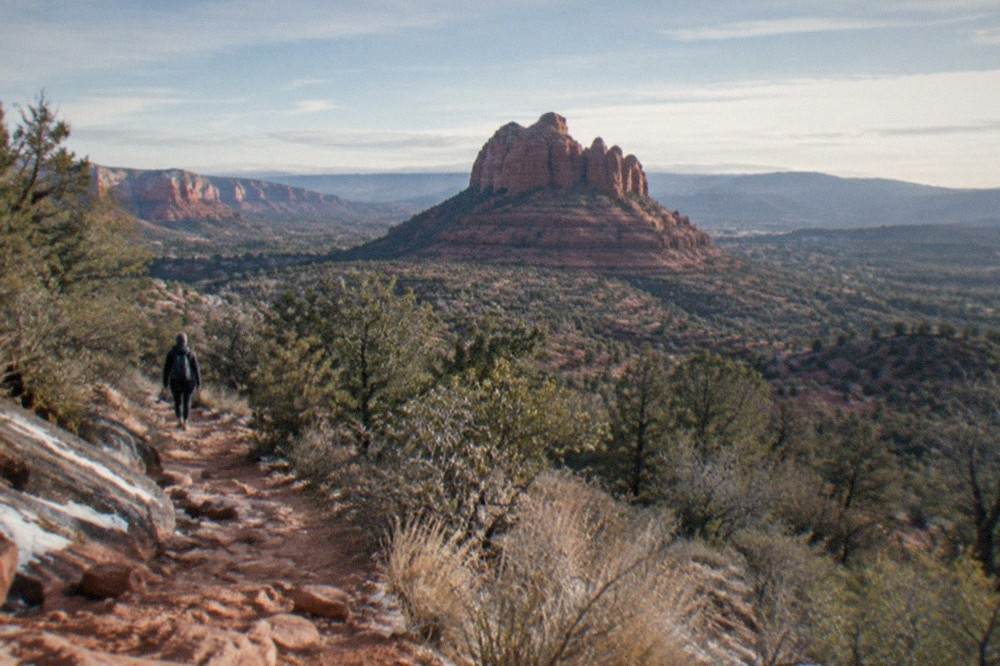
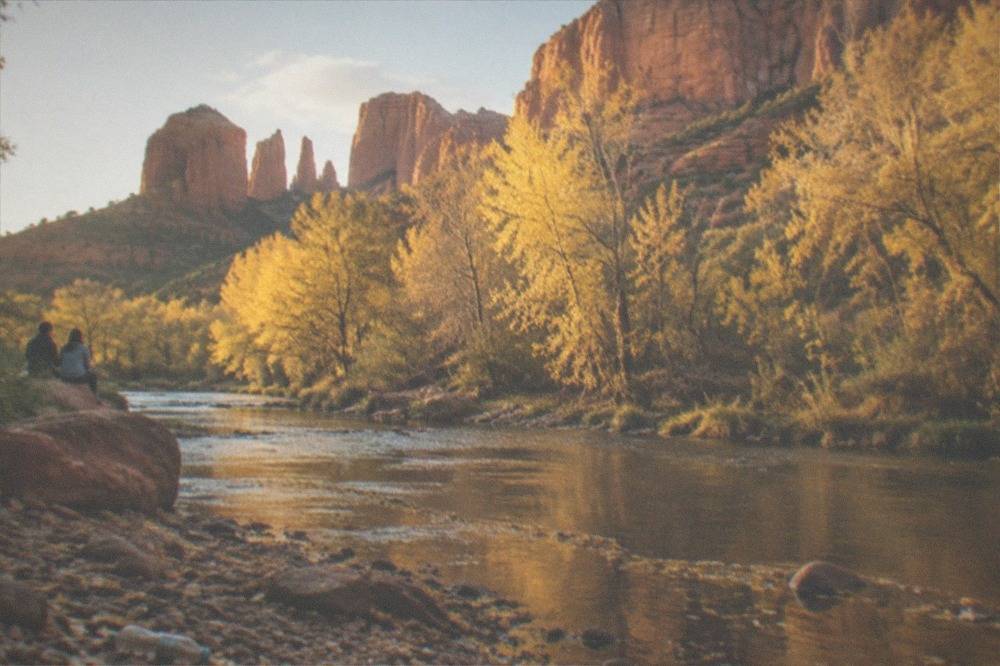
The shoulder months deserve their reputation. October and November in particular combine three things that rarely line up: comfortable hiking temperatures, low storm risk, and the tail end of the fall color in Oak Creek Canyon, where the canyon walls turn before the desert floor does. Spring is nearly as good, with the difference that March and April carry more wind and the occasional late cold snap.
Summer heat in this part of Arizona is worth taking seriously rather than shrugging off. The National Weather Service office in Phoenix issues its heat alerts using a HeatRisk framework that weighs the forecast high, the overnight low, how long the heat lasts and how unusual it is for the date, rather than one fixed temperature trigger, and it covers the Oak Creek Canyon corridor too. Before booking any midday outdoor activity from June through September, check the live forecast at NWS Phoenix heat guidance and plan around it.
If a comfortable-weather day trip is the goal, a guided departure removes the driving and the parking puzzle in one move. The Sedona, Jerome & Montezuma Castle Day Trip covers three stops in a single full day from Phoenix, it is rated 4.9 from 39 reviews, and it starts from $165 per person with hotel pickup offered.
When Is Sedona's Busy Season?
Sedona's peak runs March through May, with a second surge across October and the Thanksgiving weekend. March is the single busiest month, driven by spring break traffic and the best early-season hiking weather. The quietest months with still-usable weather are late January, early February, late November and the first half of December, when weekday trailheads can be half empty.
Busy season in Sedona is not an abstraction, it is a parking problem. The town's most famous trailheads, Cathedral Rock and Soldier Pass among them, fill early and often overflow. The response has been structural: the free Sedona Shuttle serves those trailheads Thursday through Sunday, and private vehicles are blocked from the Cathedral Rock and Soldier Pass lots while the shuttle is running. In peak months that means a visitor driving themselves either rides the shuttle, arrives before roughly 8 a.m., or accepts a longer walk.
Tour departures follow the same curve. The Sedona day tours on this roster that are flagged as often selling out, including the Sedona, Jerome & Montezuma Castle Day Trip and the Sedona with Montezuma Castle Small-Group Tour, fill first in March and April, then again around the October color season. Booking two to three weeks ahead is comfortable in the shoulder months; in March, earlier is safer.
Pricing on lodging behaves the way you would expect, with rates peaking March through April and again in October. Tour pricing on this roster stays flat across the year, so the cost of a guided day is the same in February as in April; what changes is availability. For more on the town itself as a destination, see our longer piece on whether Sedona is worth a day trip from Phoenix.
How Does Monsoon Season Change A Sedona Trip?
Monsoon season runs roughly June through September, and it reshapes a Sedona day in three ways: afternoon thunderstorms build over the red rocks, flash-flood risk rises in every slot and creek drainage, and humidity makes the heat feel heavier than the thermometer says. Mornings are usually the stable window, so the practical monsoon strategy is early starts, afternoon indoor or scenic-drive time, and flexible plans.
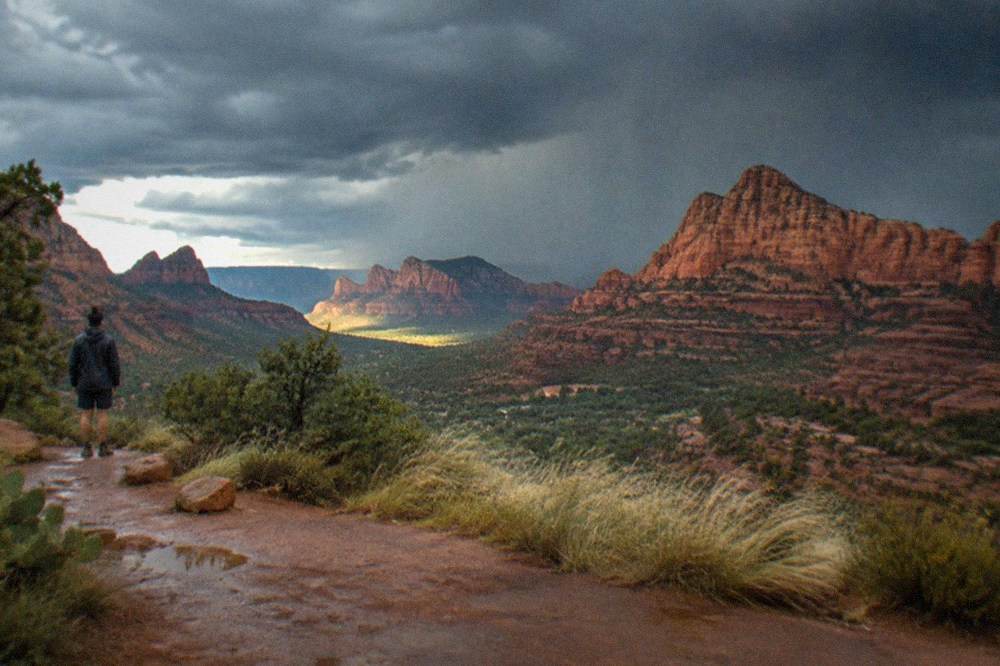
The monsoon is not a daily downpour. The typical pattern is a clear, hot morning, clouds stacking over the Mogollon Rim by early afternoon, and a fast-moving storm cell that can drop heavy rain over one drainage while the next canyon stays dry. For photographers this is a gift: monsoon storms over the red rocks produce some of the year's most dramatic light. For hikers it is a schedule constraint, because the danger in Oak Creek Canyon and the area's dry washes is not rain where you stand but water arriving from storms miles upstream.
The same logic applies to the drive up from Phoenix, since I-17 climbs through the same corridor the storms use. A guided day trip handles this naturally: the driver tracks the forecast, the itinerary keeps the most exposed stops in the morning, and the ride home happens after the cells have usually passed. The Sedona with Montezuma Castle Small-Group Tour is a good fit for this kind of day, rated 4.8 from 76 reviews, from $179 per person, with hotel pickup offered and an often-sells-out flag worth respecting in summer too.
What About The 2026 Wildfire Closures Near Sedona?
The Pocket Fire, which started around June 19, 2026, grew past 27,000 acres near Oak Creek Canyon and forced evacuations and SR-89A closures, and its aftereffects linger into October 2026: the West Fork and the Slide Rock swim area have stayed closed because of post-fire ash and sediment washing into the creek. Anyone planning a Sedona trip in fall 2026 should check closure status before locking in an itinerary.
This is the fact most first-page search results will not surface, and it matters for the specific months people usually recommend. October is normally the marquee month for Oak Creek Canyon, but this year the canyon's two most famous water features are affected by closures that have nothing to do with the fire being out. Burn scars shed ash and debris into creeks for months after containment, especially when monsoon rain hits freshly burned slopes, and land managers keep swim areas and creek corridors shut until water quality and debris risk settle.
The main Sedona viewpoints, the Uptown district and most of the flagship trails outside the canyon corridor have not been part of these closures, so a fall 2026 trip is far from ruined; it just needs its Oak Creek Canyon expectations adjusted. If the swim holes and West Fork were the reason for the trip, push the visit later into the season or swap in Montezuma Castle, Jerome and the Red Rock Scenic Byway stops, which sit outside the affected corridor. Current road status for any route into the canyon is posted at Arizona's official 511 traffic and closure site.
What Can You Do In Sedona Each Month?
Every month in Sedona has a workable angle, but the activity changes: winter is for crisp hikes and snow-dusted red rocks, spring is the all-around peak, early summer is for hot-weather starters, monsoon months are for storm photography and early starts, and fall is for color in Oak Creek Canyon, with the 2026 creek closures noted above. The table below matches each month to its realistic plan.
| Month | Typical Conditions | Best Plan |
|---|---|---|
| January | Crisp days, cold mornings, occasional snow on the high rocks | Quiet trailheads, weekday visits, scenic drives |
| February | Mild afternoons, thin crowds before the spring rush | Hiking without parking stress, off-season lodging rates |
| March | Prime weather, spring break crowds, shuttle season ramps up | Book tours and lodging well ahead, use the Sedona Shuttle |
| April | Warm, dry, excellent light, peak visitor volume | Full-day itineraries, early trailhead starts |
| May | Hot afternoons building toward summer, still dry | Morning hikes, afternoon town and viewpoint time |
| June | Hot and dry before monsoon moisture arrives, longest days | Earliest starts, sunset viewpoints, indoor midday breaks |
| July | Monsoon builds: storm risk, humidity, flash-flood watch in washes | Early starts, storm photography, flexible afternoon plans |
| August | Peak monsoon pattern, hot and humid between cells | Morning activity, scenic drives between storms |
| September | Monsoon fades, warmth holds, crowds thin | A strong sleeper month for hiking and value |
| October | Mild days, fall color in Oak Creek Canyon, second peak season | Book ahead; note the 2026 West Fork and Slide Rock swim-area closures |
| November | Cool and clear, color lingering early in the month, quiet trails | Hiking, Montezuma Castle and Jerome loop days |
| December | Short days, cold nights, holiday events in Uptown | Scenic drives, town time, crisp midday hikes |
Two notes on reading that table honestly. September is the month people overlook: the storms taper off, the heat softens, and the October crowds have not arrived, which makes it a genuine value pick even though no one markets it that way. And March deserves its crowd warning rather than a blanket endorsement, because its perfect weather is exactly why the shuttle system and the parking controls are under the most strain.
For a month-by-month plan that skips the self-drive question entirely, the Montezuma Castle, Jerome and Sedona Day Tour runs an eight-hour loop from Scottsdale or Phoenix that pairs the red rocks with two Verde Valley stops, from $225 per person with hotel pickup offered. Its rating currently stands at 5 from 8 reviews, a small pool, so treat that as an early signal rather than a verdict.
How Do You Plan Around Fees And The Shuttle?
The two planning costs that catch Sedona visitors off guard are the Red Rock Pass, required to park at most developed Forest Service trailheads at $5 daily, $15 weekly or $20 annual, and the shuttle-only parking rule at Cathedral Rock and Soldier Pass on shuttle days. Neither applies if you ride a guided tour, since the operator handles parking, and the America the Beautiful interagency pass is honored at Red Rock Pass sites.
The pass system is simple once you know it exists. Most of the trailheads people actually come for, the ones with developed lots inside the Coconino National Forest, require a Red Rock Pass displayed on the dashboard; the daily version is $5, the seven-day version $15, and the annual version $20, per the Coconino National Forest passes information. Town lots and state-road pullouts are a different system, which is why some visitors never hit a fee and others pay twice in one day.
The shuttle rule is the second half of the puzzle. On the days it runs, Thursday through Sunday, the free Sedona Shuttle is the only way into the Cathedral Rock and Soldier Pass lots, and the private-vehicle blocks are enforced. In peak season that is a convenience, not a burden: the shuttle is frequent, free, and drops visitors closer than the overflow parking they would otherwise circle for.
A guided day tour sidesteps both items. The van stops at operated lots and permitted viewpoints, the parking and any site fees are handled by the operator, and the day is built around the season rather than against it. For travelers weighing the two approaches side by side, our comparison of renting a car versus booking a tour in Phoenix runs the numbers, and our guide to the classic Sedona day trip from Phoenix covers the self-drive version of the same day.
Common Questions About The Best Month To Visit Sedona
What Is The Best Month To Go To Sedona?
October is the single best month for most visitors: summer heat and monsoon storms have ended, fall color moves through Oak Creek Canyon, and trail conditions are at their most reliable. March, April, October and November form the wider sweet spot, with October edging out March because its crowds are slightly thinner. Fall 2026 visitors should check the West Fork and Slide Rock swim-area closures before finalizing plans.
What Is The Cheapest Month To Visit Sedona?
Late January through February, plus the first half of December, carry the lowest lodging rates and the emptiest trailheads. Weather in these months is still workable, with crisp mornings and mild afternoons, though days are short in December. Tour pricing on this roster stays flat year-round, so the savings come from lodging, not from the guided day itself.
Is Sedona Too Hot In Summer?
June through August is hot, but Sedona's elevation of roughly 4,350 feet keeps it several degrees cooler than Phoenix, and monsoon cloud cover breaks up the afternoons in July and August. The workable summer pattern is an early start, indoor or scenic-drive time through midday, and evening viewpoints. The National Weather Service uses its HeatRisk framework rather than one fixed temperature trigger, so check the live Phoenix forecast before planning midday outdoor time.
When Is Sedona's Fall Color At Its Best?
Peak color in Oak Creek Canyon typically runs from mid-October into early November, when the canyon's trees turn ahead of the desert floor. It coincides with the second busy season of the year, so lodging and tours should be booked ahead. In 2026, the Pocket Fire's aftereffects have kept the West Fork trail and the Slide Rock swim area closed into October, so confirm status before building a trip around the creek corridor.
Do I Need A Permit Or Pass To Hike In Sedona?
Parking at most developed Forest Service trailheads requires a Red Rock Pass: $5 daily, $15 for seven days, or $20 annual. The America the Beautiful interagency pass is also honored at those sites. On shuttle days, Thursday through Sunday, the Cathedral Rock and Soldier Pass lots are closed to private vehicles and served by the free Sedona Shuttle instead.